




Get an overview about urea cycle disorders, or UCDs, to understand what is happening inside the body.
Being diagnosed with a urea cycle disorder can feel overwhelming. Understanding more about it can help. A urea cycle disorder, commonly called a UCD, is a genetic disorder a child is born with. The child inherits a defective gene or genes from his or her parents, or has a spontaneous genetic mutation. People can be diagnosed with a UCD at any point in their life. No matter the age, when food made up of carbs, fats, and protein enters the body it is broken down in the digestive tract. Protein is broken down and leftover ammonia, or urea, is eliminated from the body through a healthy urea cycle in the liver. For a person living with a UCD, the urea cycle isn’t working correctly and ammonia can’t be removed properly.
There are different types of UCDs. The most common one is ornithine transcarbamylase deficiency or OTC. The name of the UCD is based on which enzyme or transporter isn’t working properly in the urea cycle. A healthy urea cycle turns toxic ammonia into urea so the body can get rid of it naturally. For a patients living with a UCD, the ammonia stays in the body and builds up to toxic levels in the blood.
Common signs and symptoms of high ammonia levels to watch out for include vomiting, headaches, aggression, and feeling very tired. When this happens it could signal a hyperammonemic crisis, which is very serious and requires immediate medical attention, because it could cause a coma, brain damage, or even death.
There are options to help control high ammonia levels due to a UCD. They include a low-protein diet, amino acid supplements, and other options your doctor can discuss with you. A UCD affects everyone differently, so make sure to always talk to your doctor to learn more about your UCD and possible ways to manage your ammonia levels.
A UCD is an inherited disease. When we eat protein, our bodies break it down into amino acids, which we need to grow and stay healthy. Extra amino acids, that our body doesn't need, are turned into a waste product called ammonia. Enzymes in the liver turn the ammonia into urea so the body can get rid of it through the urine.
In someone with a UCD, the enzyme is not working correctly. Because of this, ammonia builds up in the blood, and it can be harmful. It can travel to the brain and cause memory loss, behavior changes, coma, or seizures. UCDs affect about 1 in 35,000 births in the United States. Just because it’s rare doesn’t mean there isn’t information to help you or someone you love who is living with a UCD.


Protein, in the food you eat, is needed for the growth and development of your body.

Our bodies break down the protein we eat into amino acids, which the body needs to grow and stay healthy. The extra protein that our bodies do not need contains nitrogen, which is turned into ammonia.
The ammonia is then removed from the blood, turned into urea, and passed from the body through urine.
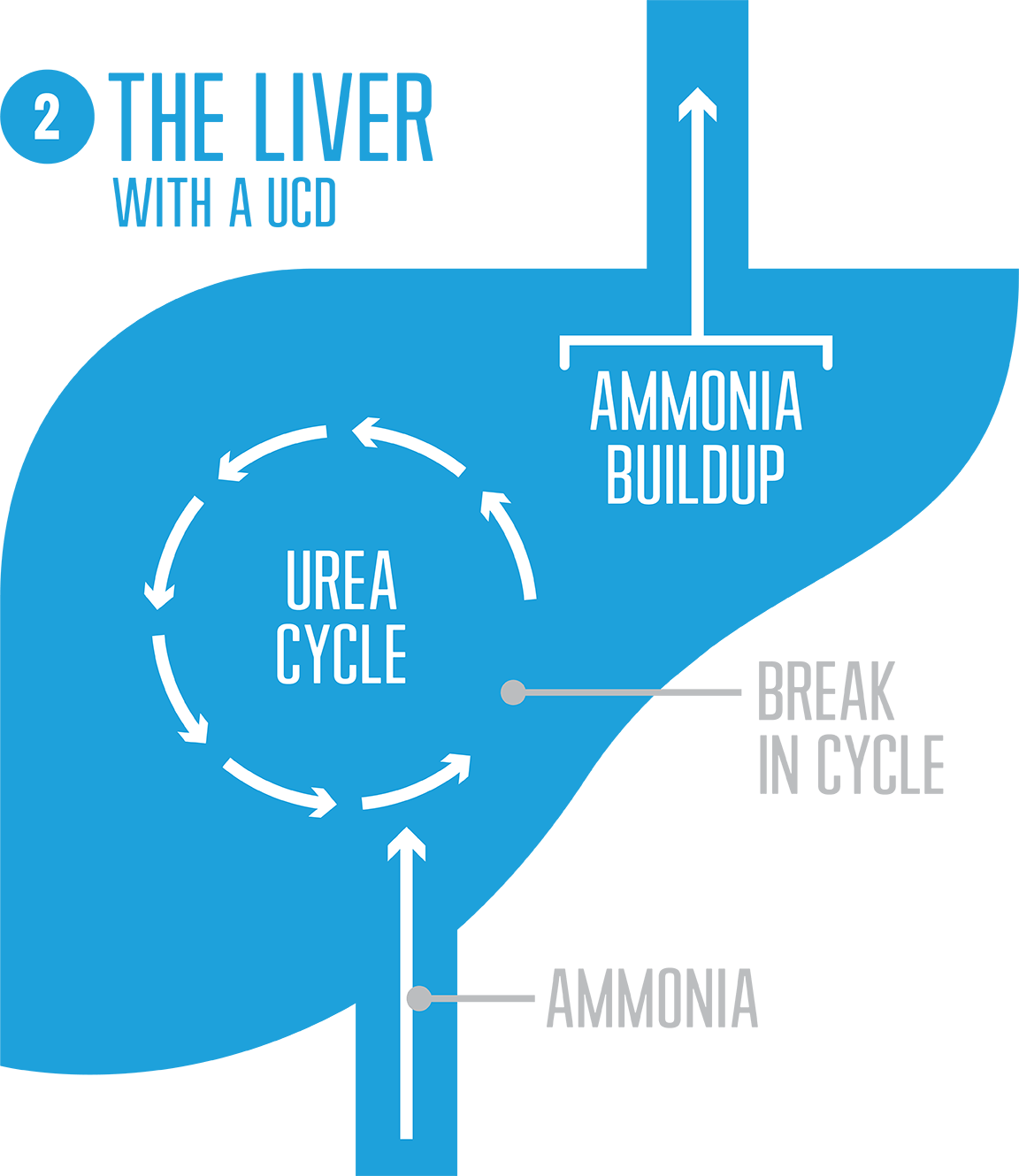
When a person has a urea cycle disorder, the urea cycle can’t change the ammonia into urea as well as it should. The ammonia builds up because the body can’t get rid of it.
The ammonia can reach toxic levels in the blood and can trigger vomiting, confusion, and swelling in the brain.
While UCDs start in your liver, it’s important to remember that elevated ammonia levels have the biggest effect on your brain.

Fortunately, there are options for people with UCDs to help control high levels of ammonia in the body. Options can include a low-protein diet, amino acid supplements, and ammonia-controlling medicines. Because every person’s needs are different, it’s important to talk to your doctor to develop a plan for how you can best manage your ammonia levels.